


safer internet day 2026: smart tech, safe choices – supporting young people to use AI safely
Updated: Feb 19
On 10th February 2026, people and organisations across the UK and around the world are coming together to mark Safer Internet Day, an annual campaign that champions the safe, responsible and positive use of digital technology. This year’s theme is “Smart tech, safe choices: Exploring the safe and responsible use of AI” and it feels more relevant than ever as artificial intelligence becomes part of everyday life for young people.
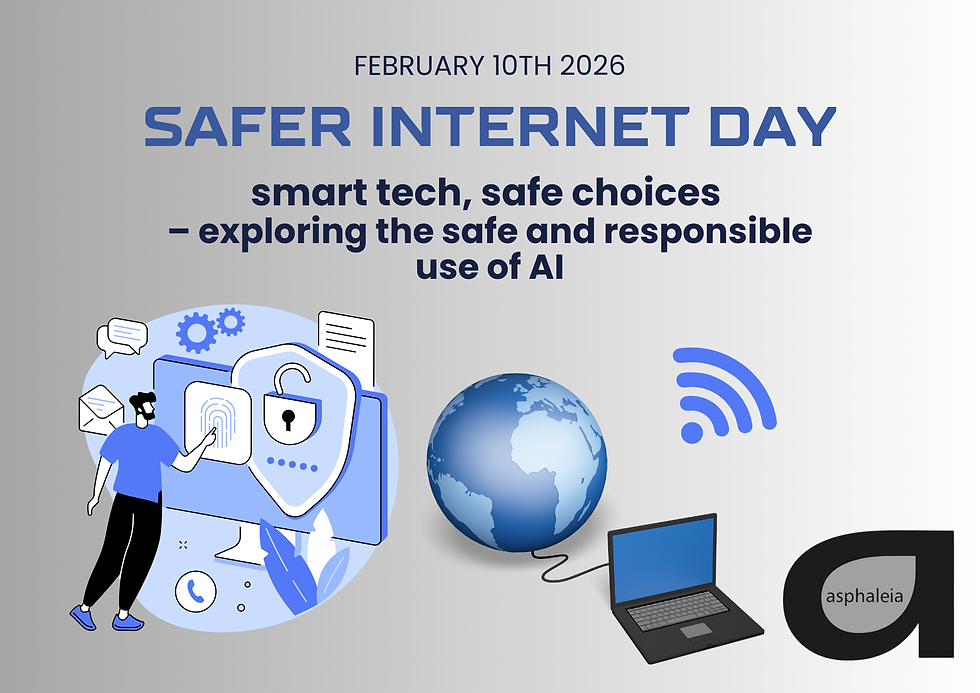
AI tools are now being used for learning, creativity, gaming, communication and social content creation. While these tools offer exciting opportunities, they also bring new risks, from misinformation and deepfakes to privacy concerns and oversharing personal data. Safer Internet Day 2026 encourages all of us to understand these challenges and help young people build the confidence and knowledge they need to make smart and safe choices online.
how we’re acknowledging safer internet day 2026 at asphaleia
We’re proud to be taking part in Safer Internet Day by helping young people across all our services understand AI, navigate risks, and use smart tech wisely. Today, staff received our monthly safeguarding bullein, which includes the prevalent concerns surrounding AI and young people's safety and how we can respond, along with some resources for staff to access for further learning.
sharing AI safety tips on our young person website
We’ve added new resources to our website for our service users that explains:
What AI tools are and what they do
How to safely use chatbots and things to look out for
5 tips for using AI safely
The online safety act and what young people need to be aware of
Key mindset tips for using AI safely
These reflect the national focus on helping young people build the skills and confidence to use AI safely.
tutors embedding AI awareness into lessons

We have some information displayed in our learning centre for students to engage with in their breaks from lessons and our tutors are weaving discussions about AI into lessons during this month, drawing from the following topics:
How to critically assess AI‑generated content
Understanding what happens to the data you give AI systems
Recognising bias and misinformation
Practical steps for safer online choices when using smart tech
keywork sessions in supported accommodation
Staff in our care services are having one‑to‑one and small‑group conversations with young people about:
How AI tools can be helpful and where to be cautious
Staying safe from impersonation scams and deepfake content
How to protect personal information
Healthy boundaries when interacting with chatbots or smart assistants
tips on our social media channels
Throughout the week, our social media will feature bite‑sized AI safety reminders to help spread awareness and support young people, parents, guardians and professionals to educate children and young people in this area.

why this year’s theme is essential learning
AI is no longer just a futuristic concept it’s deeply embedded in how we work, learn and communicate. Young people are using AI tools daily, often without realising how their data is stored, what information is being learned from their inputs, or how easily AI‑generated content can be manipulated.
By focusing on smart tech and safe choices, Safer Internet Day 2026 empowers young people to:
Think critically about what they see online
Make informed decisions when using AI
Protect their personal information
Understand the difference between real and AI‑created content
Recognise when something doesn’t feel right, and where to seek support

